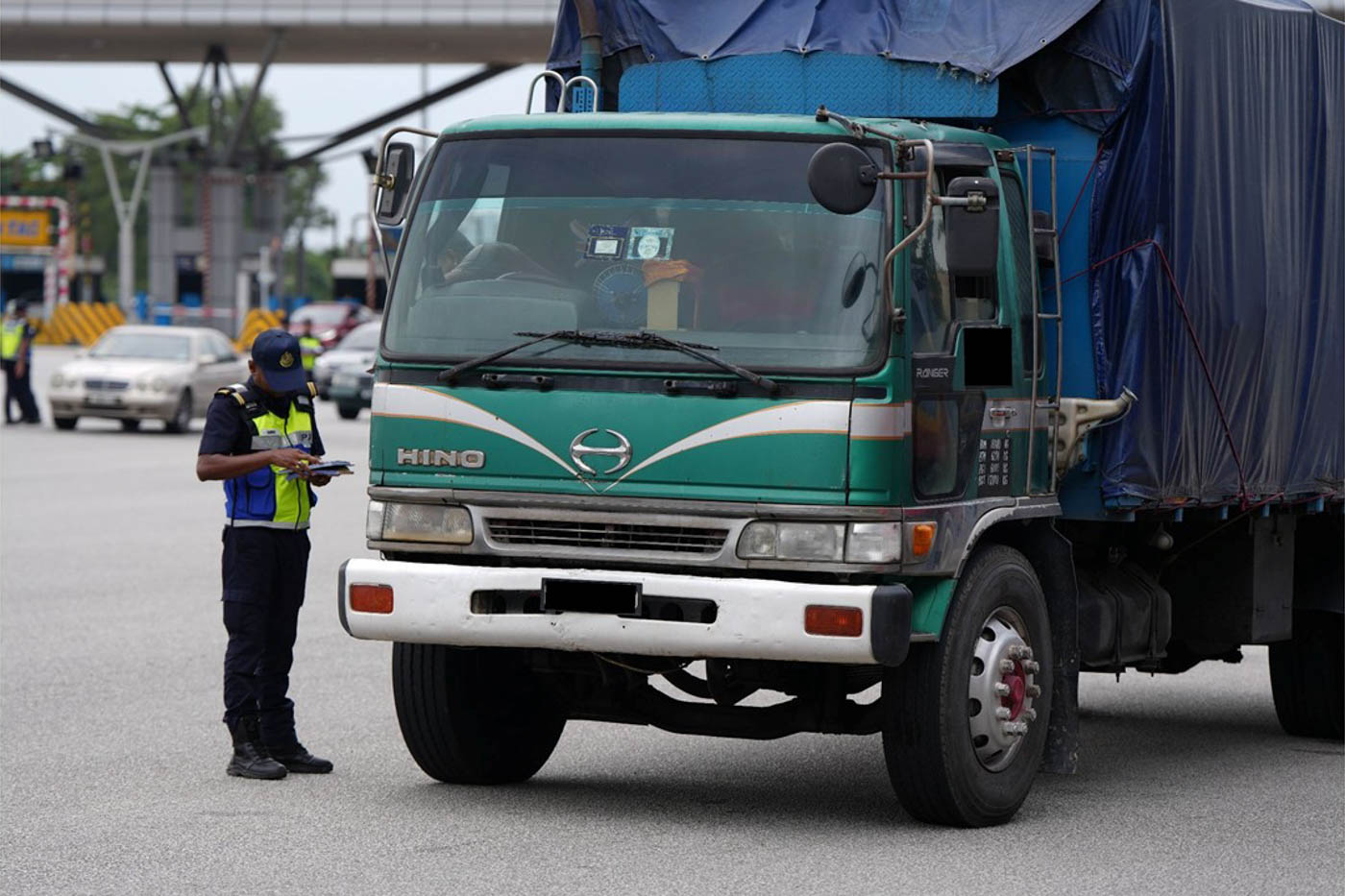
The Malaysian Ministry of Transport (MOT) has officially initiated its phased mandate requiring the installation and verification of Speed Limitation Devices (SLD) across the nation’s commercial fleet. This critical enforcement measure, announced by Minister Anthony Loke, begins on October 1, 2025, marking a pivotal step toward enhancing road safety and curbing fatal accidents involving heavy commercial vehicles.
The Core Mandate: Safety First
The enforcement of SLD usage is a direct response to recent tragedies linked to reckless driving and speeding by heavy commercial vehicles, an issue often resulting in grim consequences. The fundamental objective of this instruction, issued via the Road Transport Department (JPJ), is to increase the level of road safety and reduce the risk of fatal accidents involving heavy vehicles.
The SLD itself is a system designed to cap a vehicle’s top speed. The maximum speed limit permitted by the regulation is 90 kilometers per hour (km/j), which must be set and configured directly into the vehicle’s Electronic Control Unit (ECU) system or the SLD device. This configuration is mandatory to ensure strict compliance with the national speed limit enforcement that has been established.
Who Must Comply?
This mandatory ruling applies to specific categories of heavy commercial vehicles (M3, N2, and N3) operating in Malaysia:
1. Goods Vehicles: All lorries and heavy goods vehicles (Kenderaan Barangan) with a maximum weight (BDM/GVM) exceeding 3,500 kg.
2. Passenger Vehicles: All tour buses and express buses, defined as vehicles built to carry passengers, having more than eight seats (excluding the driver), and a maximum weight exceeding 5,000 kg.
3. Special Categories: The regulation also explicitly covers all rebuilt and imported used vehicles in the categories mentioned above.
All required SLD installations, whether original or retrofitted, must adhere to the technical standard laid out in United Nations Regulation No. 89 (UN R89).
The Phased Implementation: Critical Deadlines
The enforcement is structured in three distinct phases, designed to give vehicle owners adequate time to comply based on the vehicle’s manufacturing history:
| Phase | Vehicle Category & Manufacturing Year | Compliance Action Required | Mandatory Deadline |
| Phase 1 | Vehicles built after 1 January 2015 (already equipped with ECM/SLD) | Verification of existing SLD function. | 1 October 2025 |
| Phase 2 | Vehicles built before 1 January 2015 (but possessing SLD function in ECU) | Activation of dormant SLD function. | 1 January 2026 |
| Phase 3 | Vehicles built before 1 January 2015 without any SLD installed. | Mandatory Retrofit Installation of a new JPJ-approved SLD. | 1 July 2026 |
Mandatory Compliance and Documentation
Compliance is verified through documentation that must be obtained from a JPJ-recognized Pengesah (Certifier) or Pemasang Peranti (Retrofit Installer). These recognized bodies include manufacturers (like Hino and Isuzu), technical services (TS), and appointed service facilities.
Owners must secure two critical documents:
1. SLD Functionality Confirmation Slip (Slip Pengesahan Kefungsian SLD).
2. Laporan Kefungsian SLD (Technical Report), which contains detailed technical information and inspection results.
These documents are mandatory and must be presented during Initial and Periodic Inspections (Pemeriksaan Awalan dan Berkala) at PUSPAKOM (PPKM). Furthermore, the verification must be renewed every two (2) years, and a copy of the slip must be kept inside the vehicle at all times for enforcement checks. The documents are also required for permit applications and renewals at APAD or LPKP.
Consequences of Non-Compliance
The government is committed to enforcing this mandate due to the persistent threat of dangerous commercial traffic. Minister Loke has stated that vehicles that fail to comply with the SLD requirements will not be allowed to operate. The most stringent penalty for failing inspection or non-compliance could be the revocation of the operator’s license.
Given that recent reports (September 2025) indicated over 97% of commercial vehicles had yet to verify their SLD installations ahead of the October 1st deadline, urgency is paramount for all fleet operators. Failure to act swiftly could result in significant operational disruption and severe legal penalties. Operators must immediately contact their vehicle manufacturer or a JPJ-recognized Pengesah to schedule the necessary adjustments and verification